What Are Optical Illusions?
Optical illusions are images or visual phenomena that trick our brain into perceiving something that differs from objective reality. These fascinating visual puzzles reveal the complex processes our brain uses to interpret visual information and highlight the limitations and quirks of human perception.
Our visual system is incredibly sophisticated, processing millions of bits of information every second. However, this same complexity makes it vulnerable to certain types of visual tricks. Optical illusions exploit these vulnerabilities, creating images that can appear to move, change color, or show impossible geometries.
The Science Behind Optical Illusions
Optical illusions work by exploiting various aspects of visual processing:
Neural Processing
Our brain makes assumptions and fills in gaps based on past experiences and learned patterns.
Visual Adaptation
Our eyes and brain adapt to visual stimuli, which can create afterimages and contrast effects.
Pattern Recognition
We're wired to recognize patterns and faces, sometimes seeing them where they don't exist.
Temporal Processing
The brain processes visual information over time, creating opportunities for motion illusions.
Types of Optical Illusions
Geometric Illusions
These illusions involve distortions of size, length, position, or curvature. Famous examples include the Müller-Lyer illusion, where identical lines appear different lengths due to arrowhead directions, and the Ponzo illusion, where parallel lines appear to converge.
Color and Brightness Illusions
These exploit how we perceive color and brightness in context. The same color can appear dramatically different depending on surrounding colors. The checker shadow illusion demonstrates how context affects our perception of brightness.
Motion Illusions
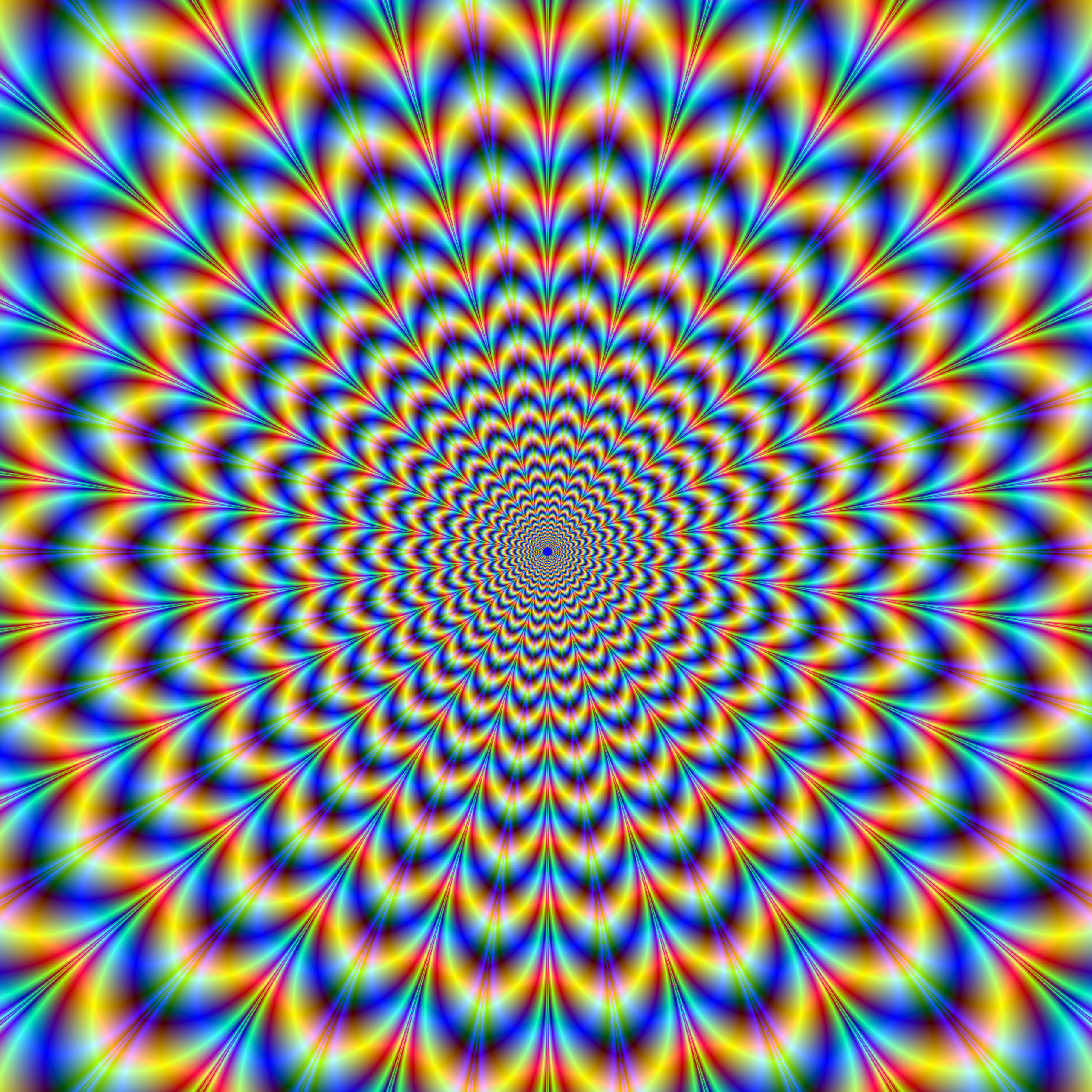
Static images that appear to move or rotate. These work by exploiting how our brain processes motion and can create compelling sensations of movement in perfectly still images.
Ambiguous Figures
Images that can be interpreted in multiple ways, such as the famous duck-rabbit illusion or the Necker cube. These demonstrate how our brain actively constructs our visual experience.
Real-World Applications
Understanding optical illusions has practical applications in many fields:
- Art and Design: Artists use illusion principles to create depth, movement, and visual interest in their work.
- Architecture: Architects employ visual tricks to make spaces appear larger, taller, or more dynamic.
- User Interface Design: UI designers use visual principles to guide attention and create intuitive interfaces.
- Safety and Transportation: Road markings and signs use illusion principles to improve visibility and safety.
- Psychology and Neuroscience: Illusions help researchers understand how the brain processes visual information.
- Entertainment: Magic tricks, movies, and games use illusions to create wonder and engagement.
Famous Optical Illusions
The Dress
In 2015, a photograph of a dress went viral because people couldn't agree on its colors. Some saw blue and black, others saw white and gold. This illusion demonstrated how lighting conditions and individual differences in color perception can lead to dramatically different interpretations of the same image.
Penrose Triangle
Also known as the "impossible triangle," this figure appears to be a solid three-dimensional object but is actually impossible to construct in reality. It demonstrates how our brain tries to interpret 2D images as 3D objects, sometimes leading to impossible conclusions.
Hermann Grid
When looking at a grid of black squares separated by white lines, gray spots appear at the intersections of the white lines. This illusion is caused by the way our retinal cells process contrast and demonstrates lateral inhibition in visual processing.
Interactive Quiz: Test Your Perception
Think you can't be fooled by optical illusions? Test your perception skills with our interactive quiz featuring classic and modern illusions.
Take the Illusion QuizResearch and Academic Resources
For those interested in diving deeper into the science of optical illusions, here are some valuable academic resources: